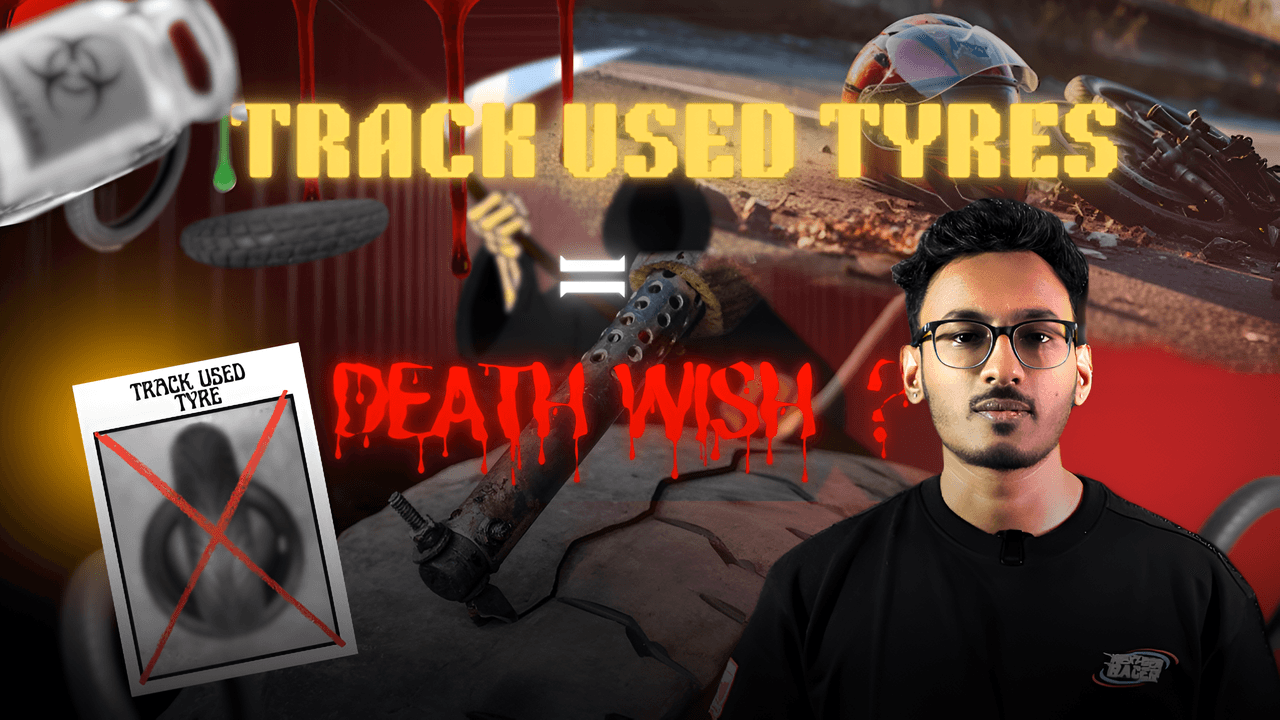
But behind these “budget-friendly” options lies a hazardous and largely unregulated ecosystem, one that puts rider safety at serious risk. This article aims to shed light on the origin, treatment, and risks associated with second-hand and grey market tyres in India.
The Global Scrap Pipeline Feeding India’s Grey Market
What most consumers don’t realize is that a significant portion of these low-cost tyres are not simply used, they are decommissioned scrap sourced from international test centers, R&D facilities, and racetracks in Europe, Japan, and North America. These tyres are retired after reaching the end of their safe lifecycle in controlled environments.Instead of being disposed of through regulated waste management, they’re bundled and auctioned off in large volumes, sold at scrap value to exporters, many of whom route them to developing markets like India.
The Shipping Tactic That Damages Tyres Before Arrival
To maximize profits, exporters often employ a practice known as ‘doubling’ where tyres are forcibly folded and packed into each other to reduce shipping volume. The physical stress of this method, combined with long sea journeys and extreme temperatures inside containers, causes permanent structural damage to the tyres.By the time they land in India, these products are already compromised:
Cosmetic Restoration: A Dangerous Illusion
Once in local markets, these tyres undergo superficial treatments to improve their appearance. Many dealers use:Misleading Terminology: “Track Used” ≠ High Performance
One of the most exploited marketing terms is “track used,” which falsely suggests that the tyres were part of professional racing environments and therefore still capable of high performance.In reality, these are often touring or road-focused tyres models like Michelin Road 6 or Pirelli Angel GT never designed for racetrack usage. Labelling them as “track used” is both inaccurate and irresponsible.
The Real-World Risks of Using Compromised Tyres
The physical degradation of these tyres is not always visible. But the performance compromises are profound:Loss of grip due to dried out compounds and oxidized rubber
Weakened sidewalls prone to flex failure under cornering loads
Poor balance and vibration issues from deformation during transport
Delayed braking and high-speed instability, especially under load or in panic scenarios
For a vehicle with limited traction control and high torque output like most superbikes these issues can be fatal.
When (If Ever) Can These Tyres Be Used?
There are limited, low-risk applications where such tyres may be acceptable:Final Thoughts: Value vs Risk
Choosing the right tyre is not just a performance decision it’s a safety imperative. At Torque Block, we’ve seen far too many riders compromise on tyres to save a few thousand rupees, only to face catastrophic results.Your motorcycle’s tyres are its only contact with the road. No matter how advanced your machine is, brakes, electronics, and suspension everything depends on the quality and reliability of the tyres.
Before choosing second-hand or grey-market options, ask yourself: Is the price worth your safety?